A verified, head-to-head breakdown of ISO 27001:2022 and India's DPDP Act 2023 what they share, what they don't, and how to build a unified compliance framework before May 2027.
What Is ISO 27001:2022?
ISO/IEC 27001:2022 is the current international standard for Information Security Management Systems (ISMS), published by the International Organization for Standardization in October 2022. It replaced ISO 27001:2013 and introduced eleven new controls in Annex A, now reorganised into four themes (Organisational, People, Physical, and Technological).
ISO 27001 provides a systematic approach to identifying, assessing, and treating information security risks. Certification requires an independent audit by an accredited certification body, which confirms that the organisation's ISMS meets the standard's requirements.
In India, ISO 27001 certification is increasingly referenced in regulatory frameworks including RBI's cybersecurity guidelines, SEBI's CSCRF framework, and now the DPDP Act's "reasonable security safeguards" requirement.
What Is the DPDP Act 2023?
The Digital Personal Data Protection Act, 2023 commonly referred to as the DPDP Act is India's first comprehensive personal data protection law. It establishes rights for individuals (Data Principals) whose personal data is processed, and obligations for the entities that process it (Data Fiduciaries).
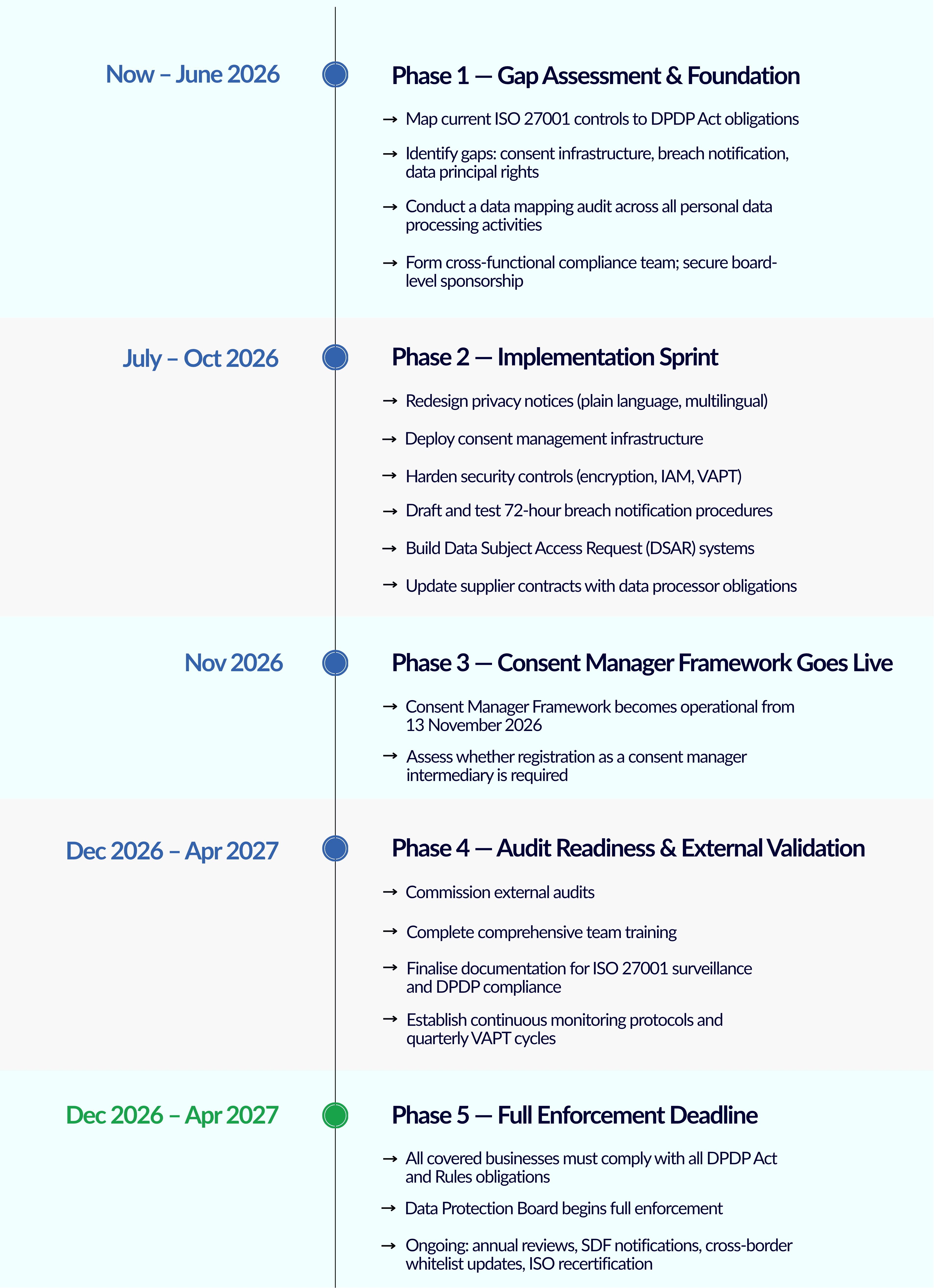
The DPDP Rules 2025 were notified by MeitY on 14 November 2025, making the framework operational. Full compliance is required by 13 May 2027, with phased obligations that make 2026 the critical implementation year.

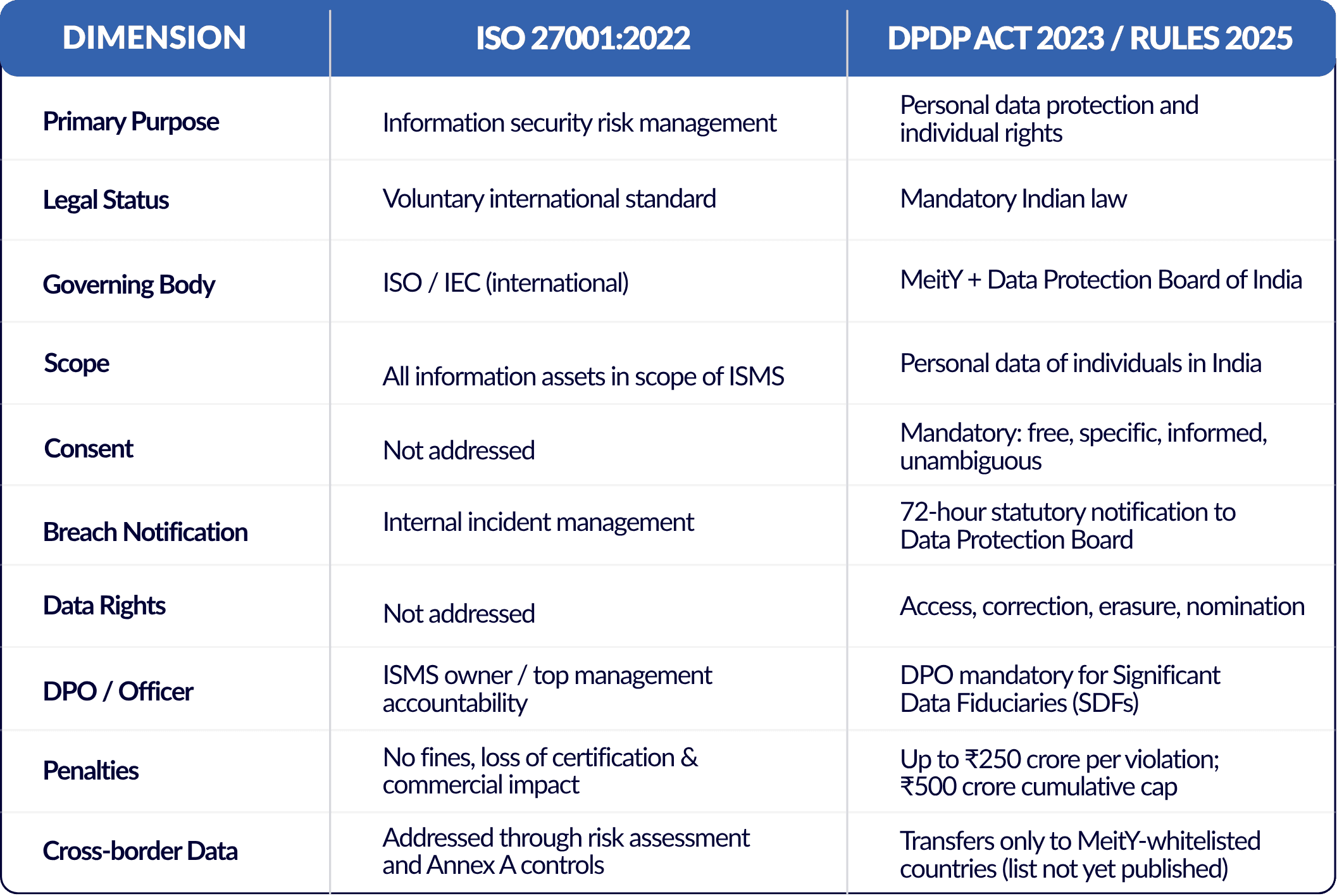
Head-to-Head: ISO 27001 vs DPDP Act
Where They Overlap: The 40% Rule
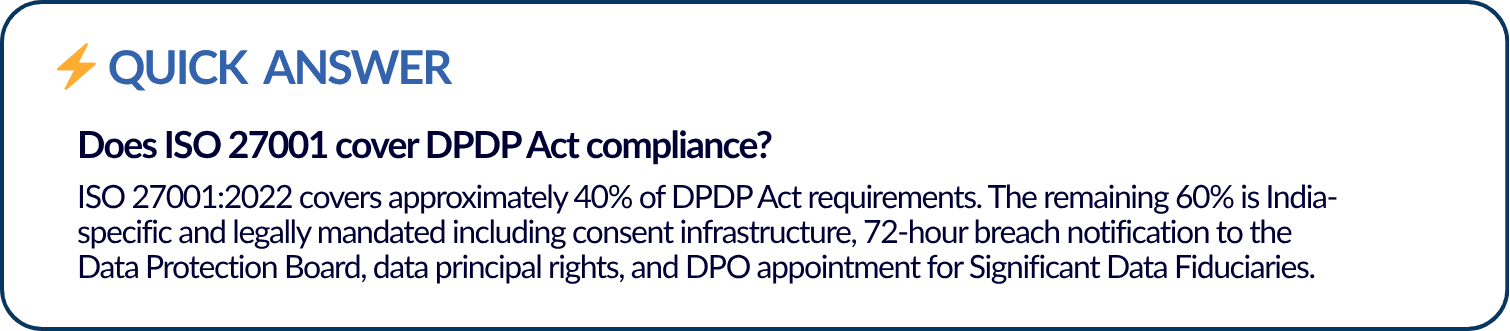
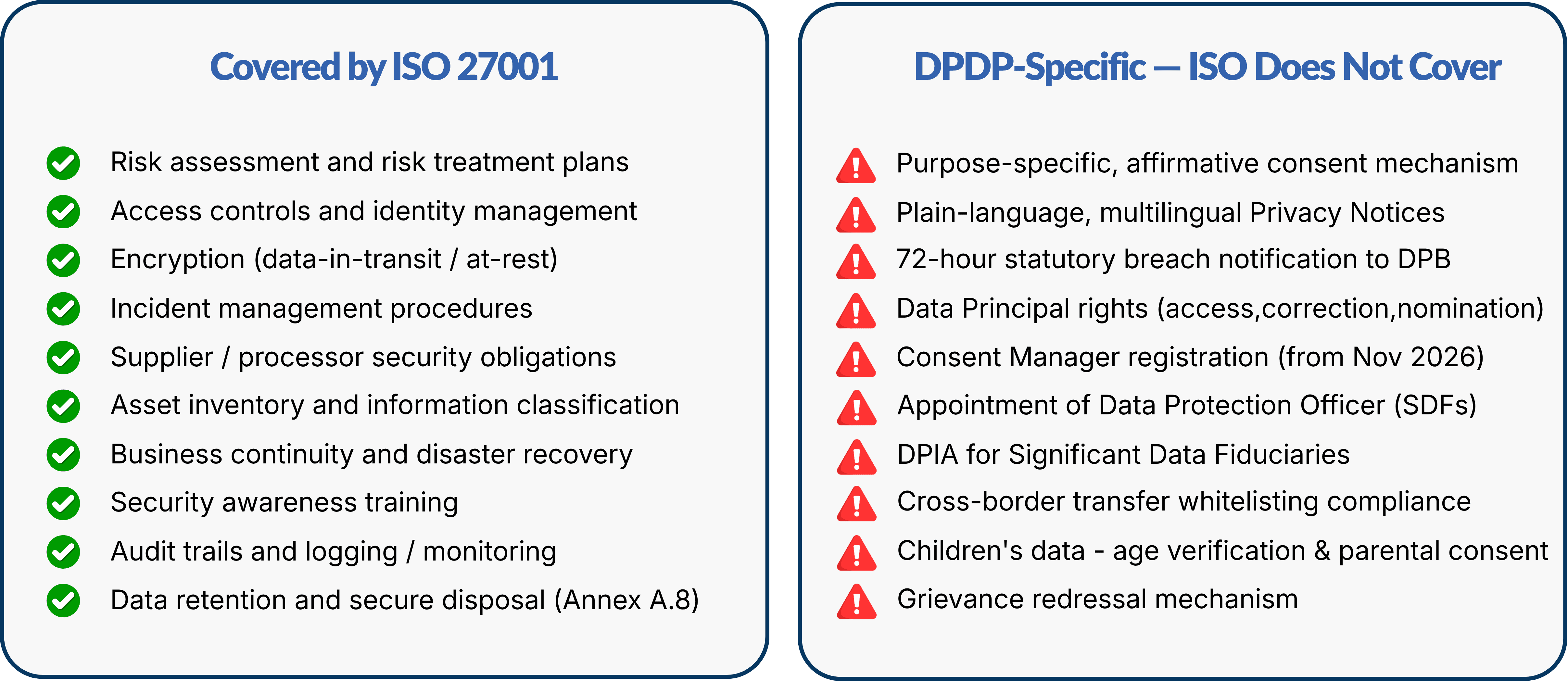
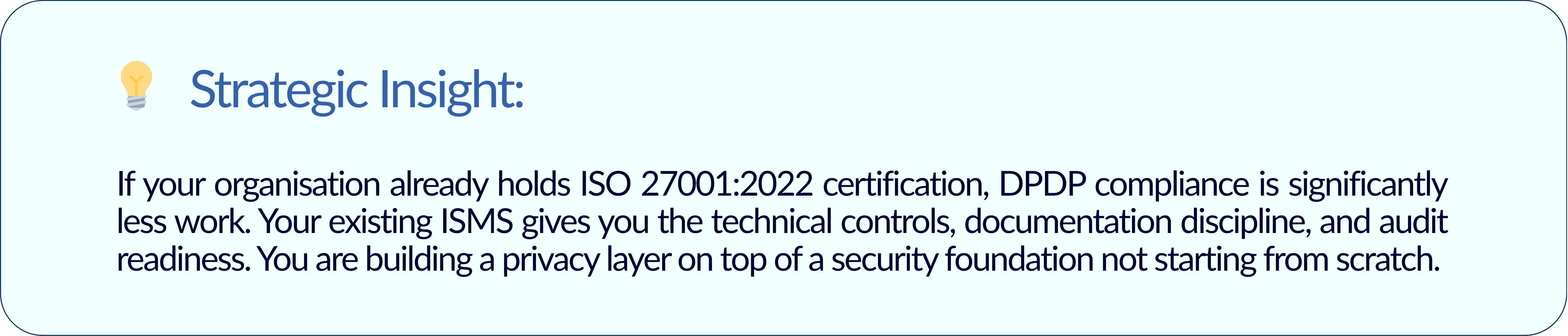
Expert consensus across compliance practitioners in India is clear: aligning with ISO 27001 covers approximately 40% of DPDP Act requirements. That is not a coincidence India's regulators explicitly aligned DPDP security safeguard language with ISO 27001 principles. The remaining 60% is India-specific and legally mandated.
Key Compliance Obligations for Indian Businesses in 2026
Under ISO 27001:2022
Indian businesses pursuing or maintaining ISO 27001:2022 certification must obtain certification from a body accredited by the International Accreditation Forum (IAF). Core documentation requirements include a Statement of Applicability (SoA), risk treatment plans, internal audit reports, management review minutes, and incident records.
Under the DPDP Act 2023 / DPDP Rules 2025
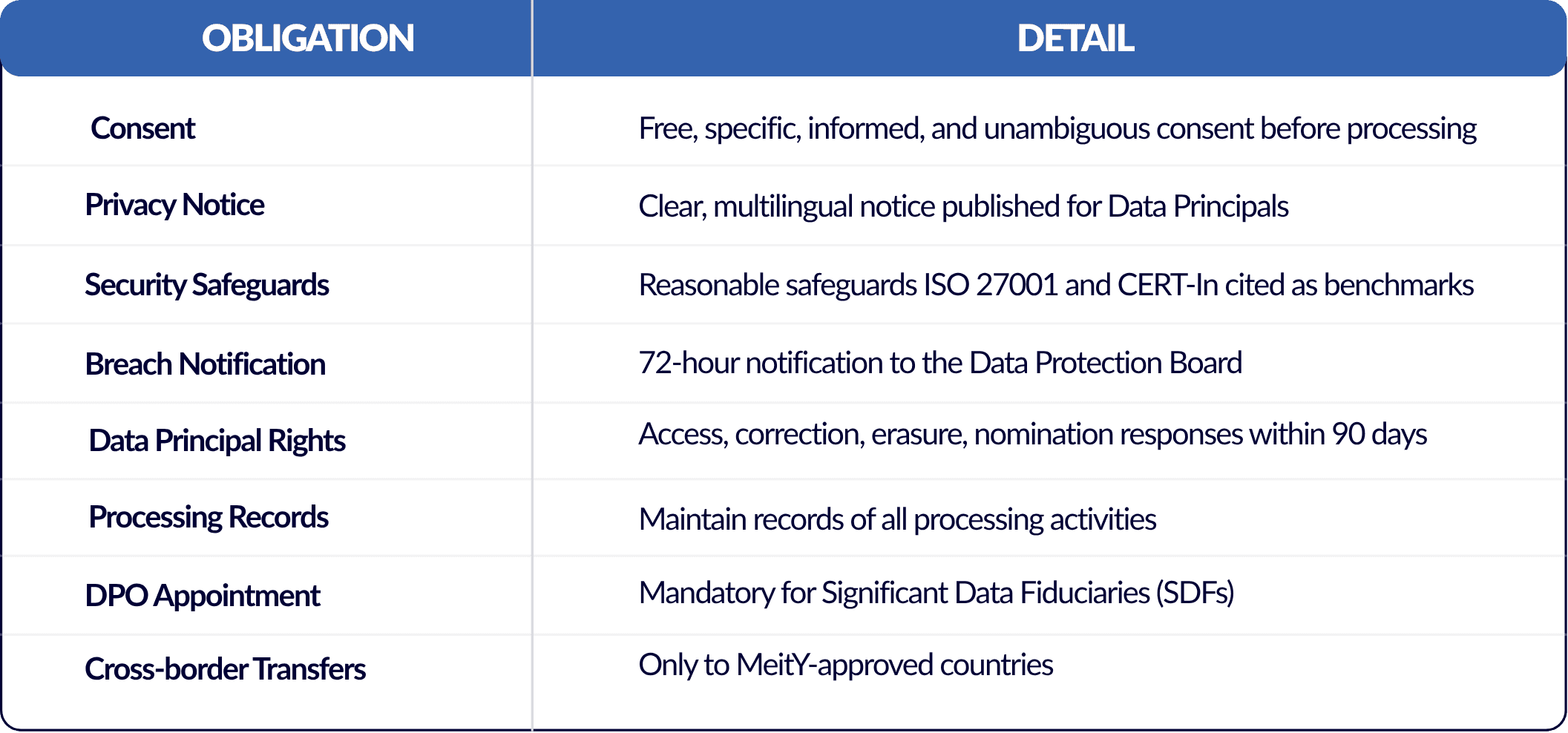
The following obligations apply to all Data Fiduciaries any entity that determines the purpose and means of processing personal data of individuals in India:
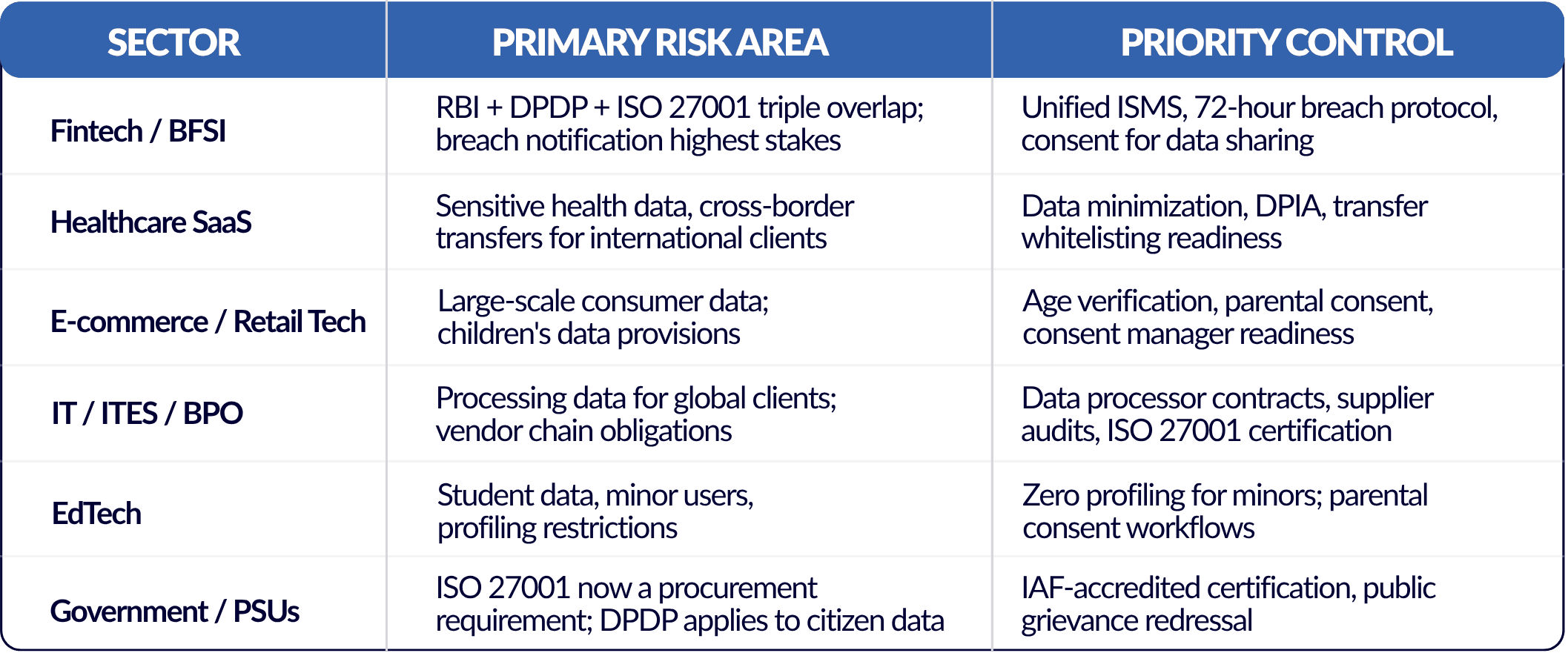
Sector-Specific Risk Profiles in India
A Unified Compliance Roadmap for 2026–2027
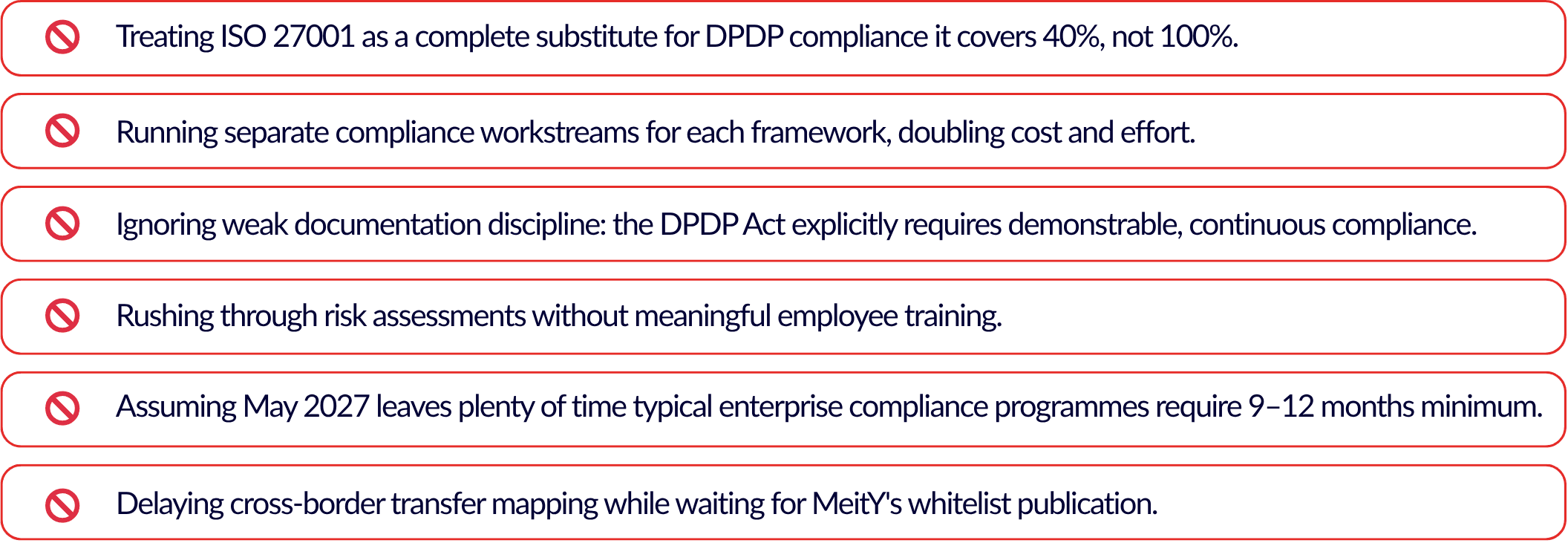
Common Mistakes Indian Businesses Make in 2026
The Bottom Line for Indian Businesses in 2026
ISO 27001 and the DPDP Act are not rivals. They are two sides of the same governance posture: one proves you have a secure system, the other proves you have a lawful one. In 2026, the Indian market demands both.
The organisations that will emerge from this compliance cycle with the strongest competitive position are those that avoided treating these as two separate programmes. A single, integrated control library with ISO 27001 as the security backbone and DPDP-specific consent, rights, and notification mechanisms layered on top cuts cost, reduces audit fatigue, and produces documentation that satisfies both a certification body and the Data Protection Board.

FAQ