Back to all posts
July 16, 2026
CMMI + CMMC: Why Process Maturity Is the Missing Link to Defense Cybersecurity Compliance

CMMC 2.0 officially dropped formal process-maturity scoring. But readiness assessments commonly identify gaps where controls are documented but not consistently implemented the exact weakness CMMI was designed to catch. Here's the CMMI thinking still hiding inside CMMC, and how to build it into your program before your C3PAO assessment.

Wait, aren't CMMI and CMMC just the same thing with a different name?
It's a fair mix-up. Both use the word "maturity." Both use a level-based structure. Both trace back to the same building in Pittsburgh. When the Department of Defense needed a way to verify that contractors could actually protect Controlled Unclassified Information (CUI), it turned to Carnegie Mellon University's Software Engineering Institute (SEI) the same institution that had spent three decades building the Capability Maturity Model Integration (CMMI) for software contractors.
That shared parentage isn't a coincidence, and it isn't just trivia. According to the SEI's own account of building CMMC 1.0, the team explicitly modeled the concept of "process maturity" in CMMC on the institutionalization logic already proven inside CMMI the idea that a practice only counts if it's documented, followed consistently, and survives staff turnover.

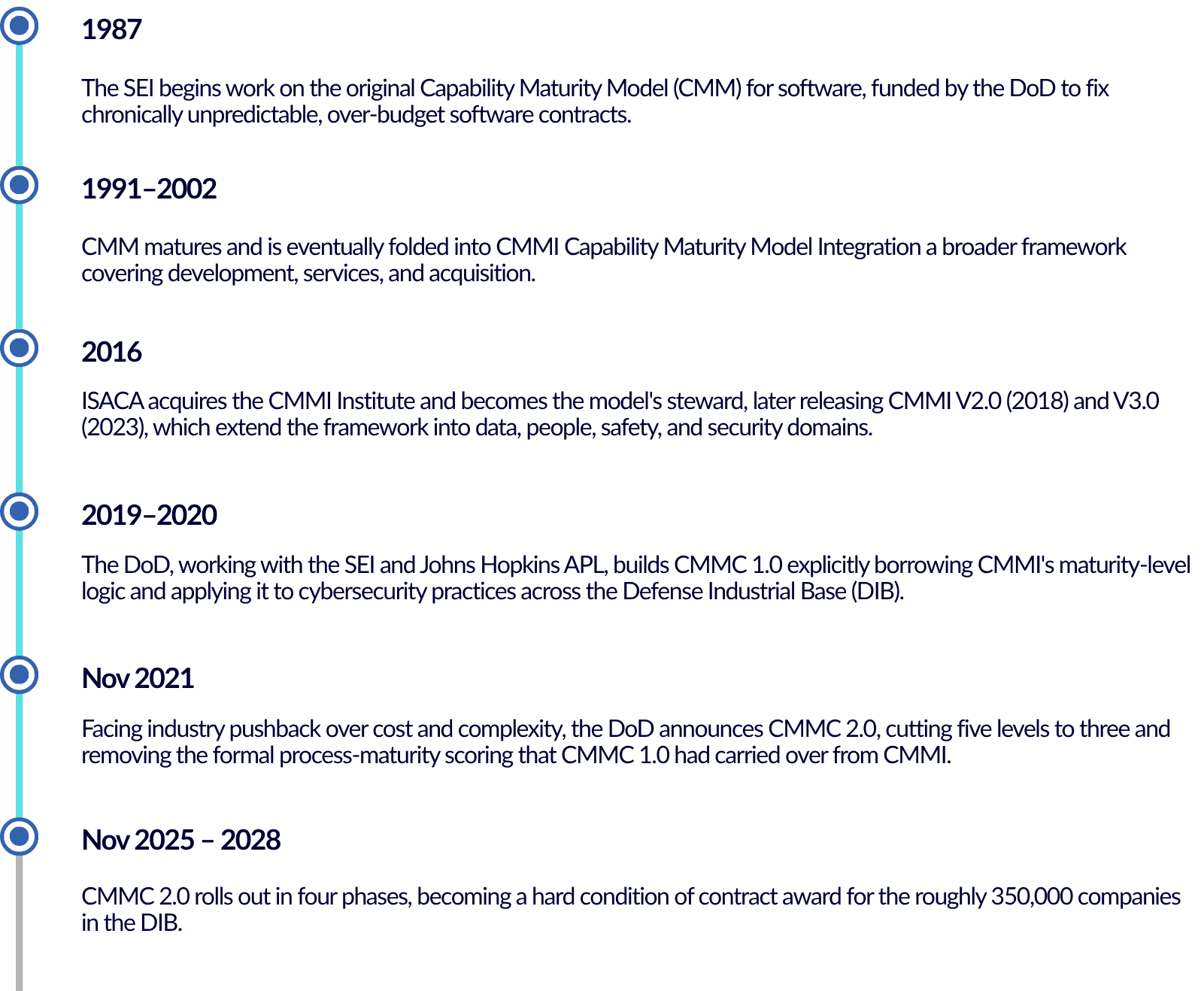
The family tree: how one maturity model became two
To see why the confusion exists, it helps to walk the actual lineage. This isn't two unrelated frameworks that happen to share a word, it's one continuous line of DoD-funded thinking about process maturity, forked into two different applications twenty years apart.
CMMI vs. CMMC - what's actually different?
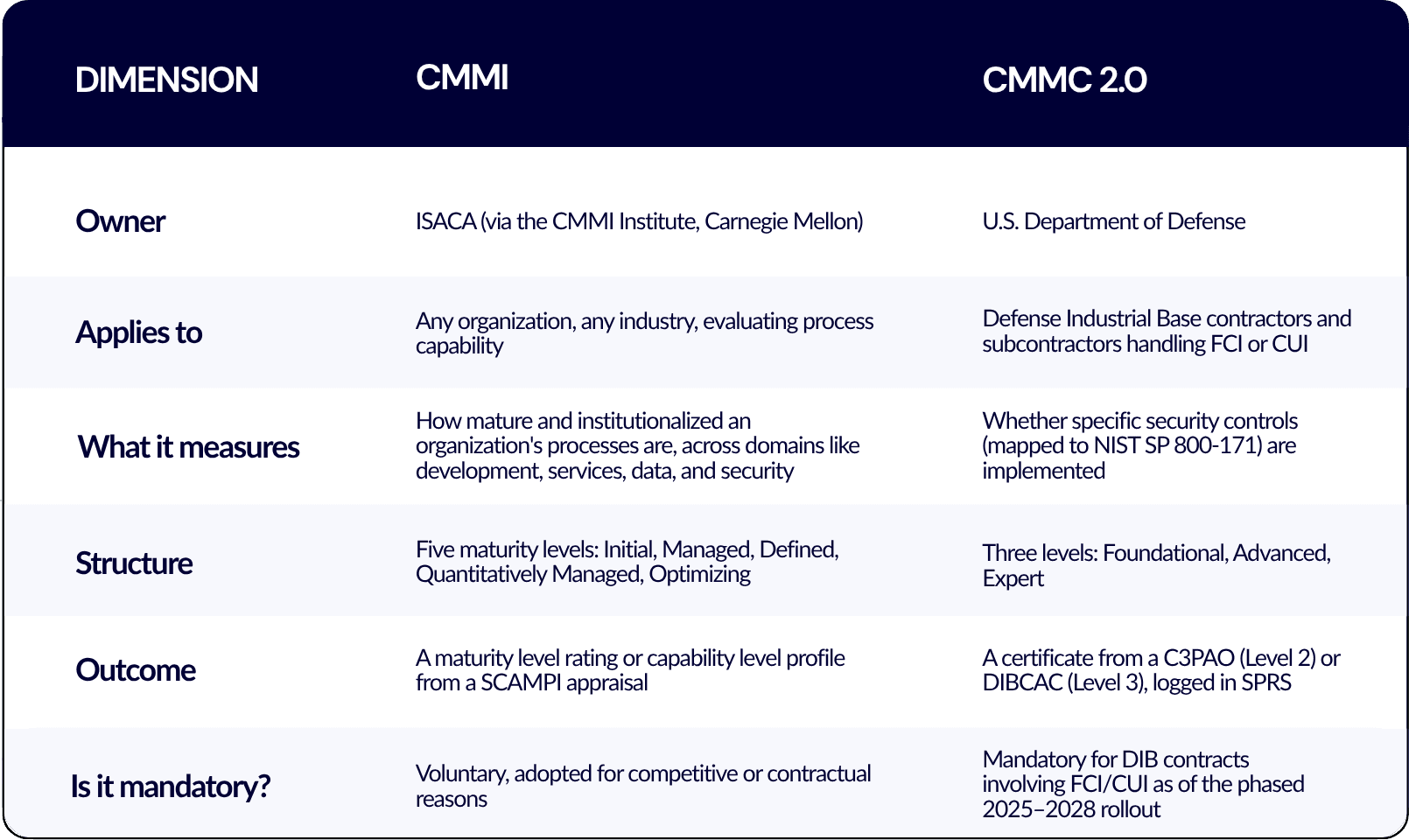
Before getting into why the overlap matters, here's the baseline distinction. They evaluate different things, for different audiences, using different mechanics.
So if CMMC dropped process maturity, why does it still matter?
This is the part most compliance guides skip. It's true that CMMC 2.0 removed the explicit "process maturity" or institutionalization scoring that CMMC 1.0 had inherited from CMMI the DoD simplified the model to focus purely on whether the 110 NIST SP 800-171 security requirements are implemented, dropping the added layer that graded how deeply those requirements were embedded across the organization.
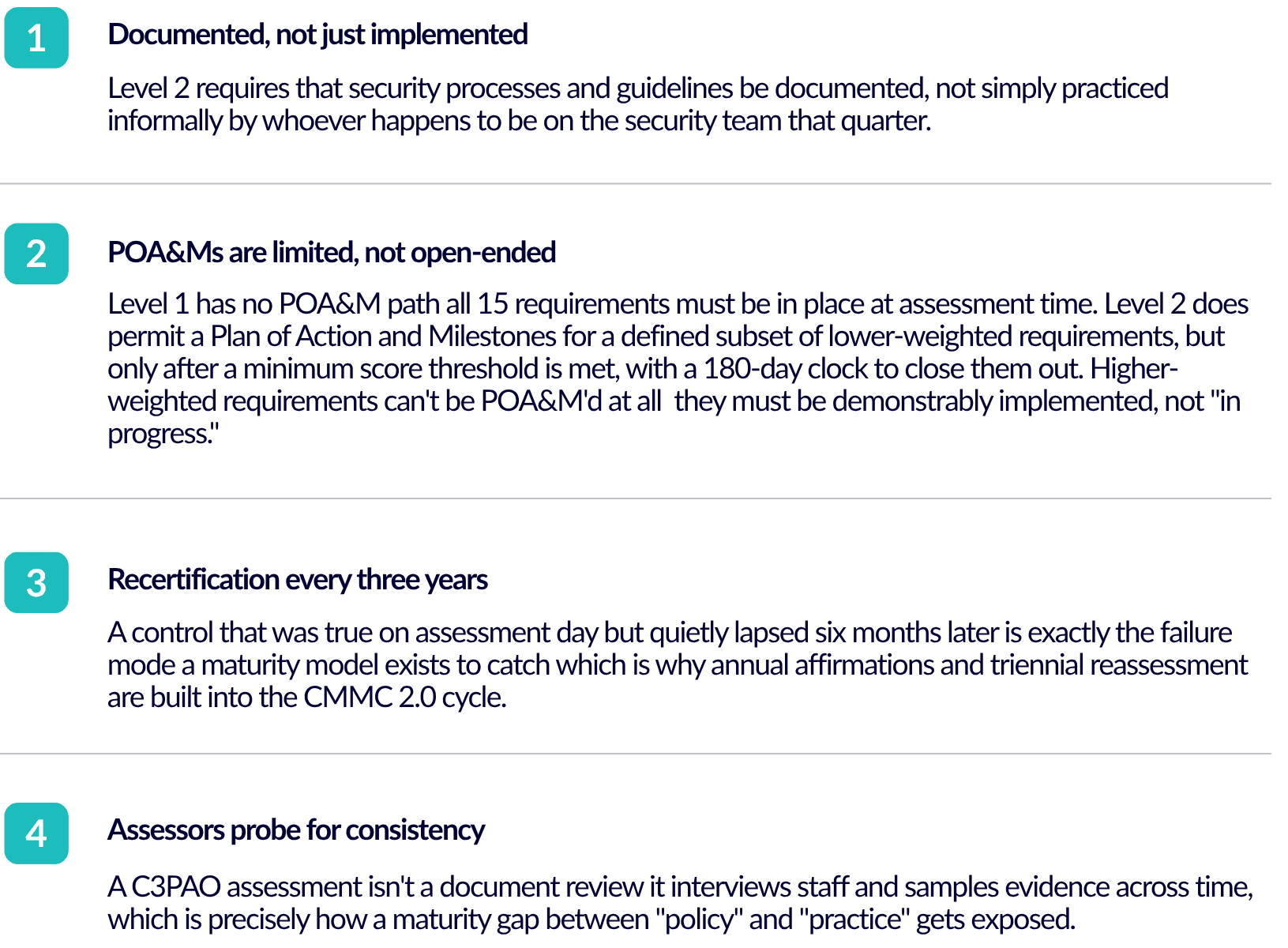
CMMC 2.0 removed formal process-maturity scoring there's no separate rating for how deeply a requirement is institutionalized. But organizations are still expected to demonstrate consistent implementation through documented policies, procedures, objective evidence, and interviews during a C3PAO assessment. Look closely at what a Level 2 assessment actually checks, and the CMMI logic is still there just unscored and easy to miss:

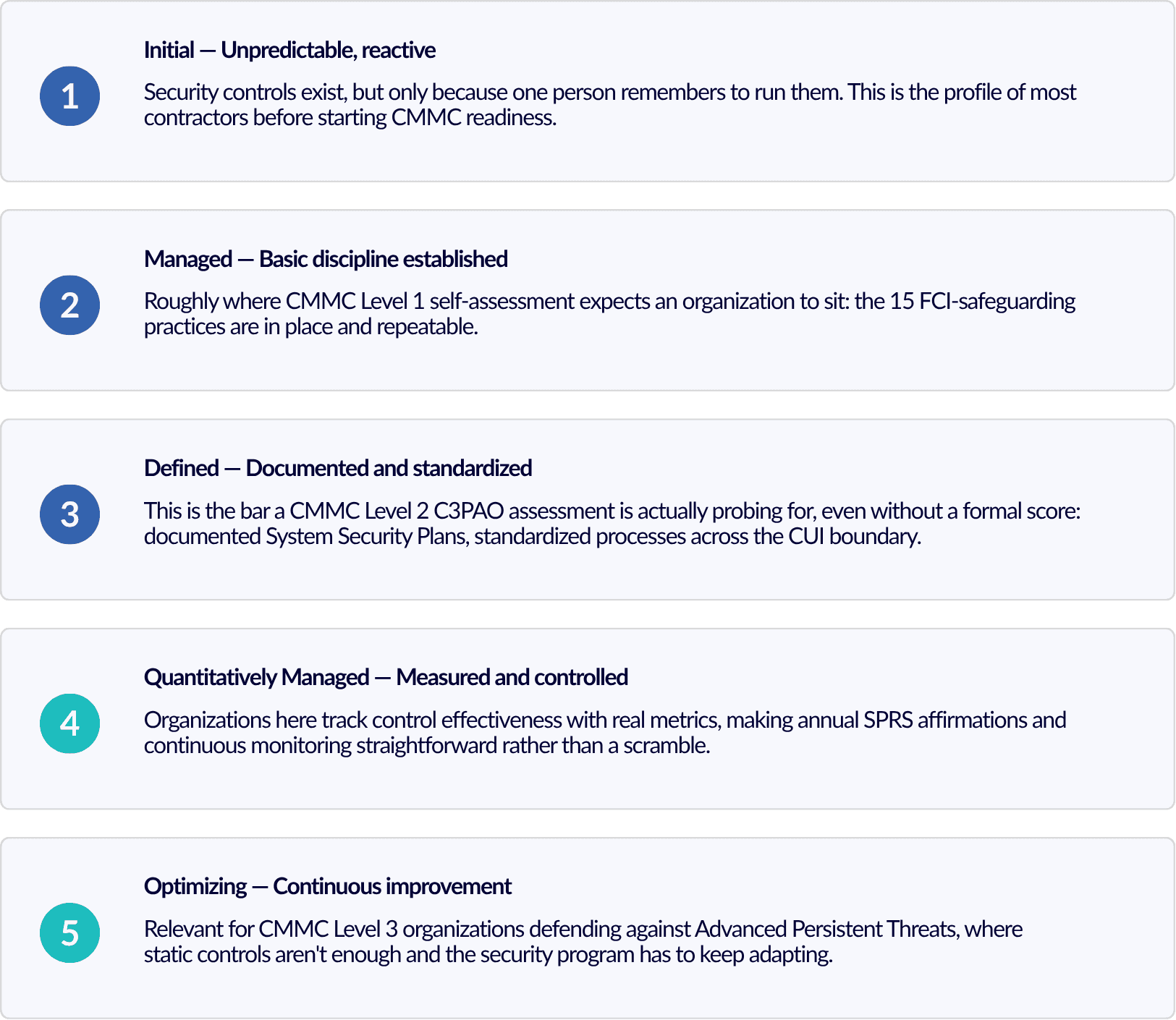
Mapping the ladders: CMMI maturity levels next to what CMMC actually expects
CMMI's five maturity levels describe a journey from chaos to continuous improvement. Overlaying CMMC's expectations onto that ladder makes it obvious why so many contractors stall out exactly where CMMI would predict.

The real cost of skipping process maturity
The numbers on CMMC readiness make the stakes concrete. This isn't a framework you can improvise your way through in the weeks before an assessment.
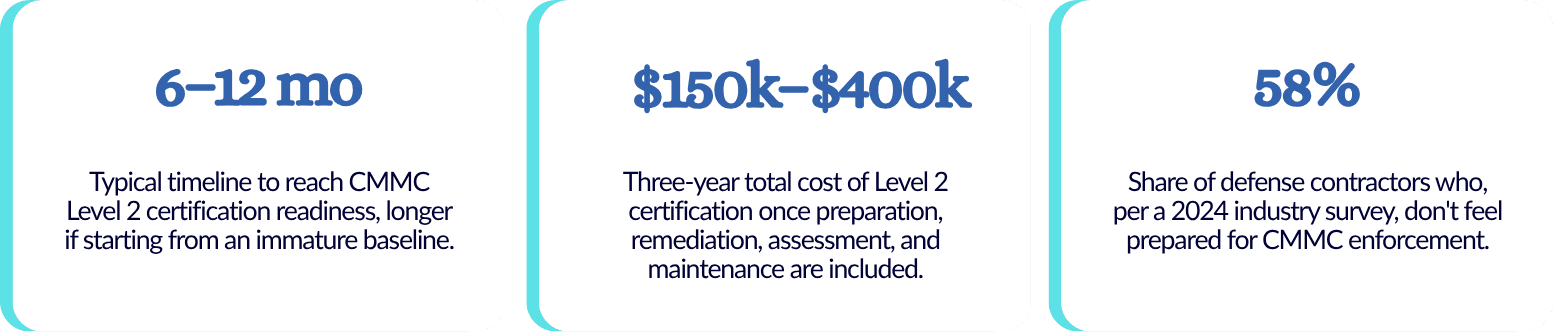
Katie Arrington, who led CMMC's development for the Office of the Under Secretary of Defense for Acquisition and Sustainment, has pointed out that a 2020 DoD review found contractors with remediation plans that wouldn't reach full NIST SP 800-171 compliance until 2099 the clearest possible evidence of controls that were declared, never institutionalized, and never actually checked again.
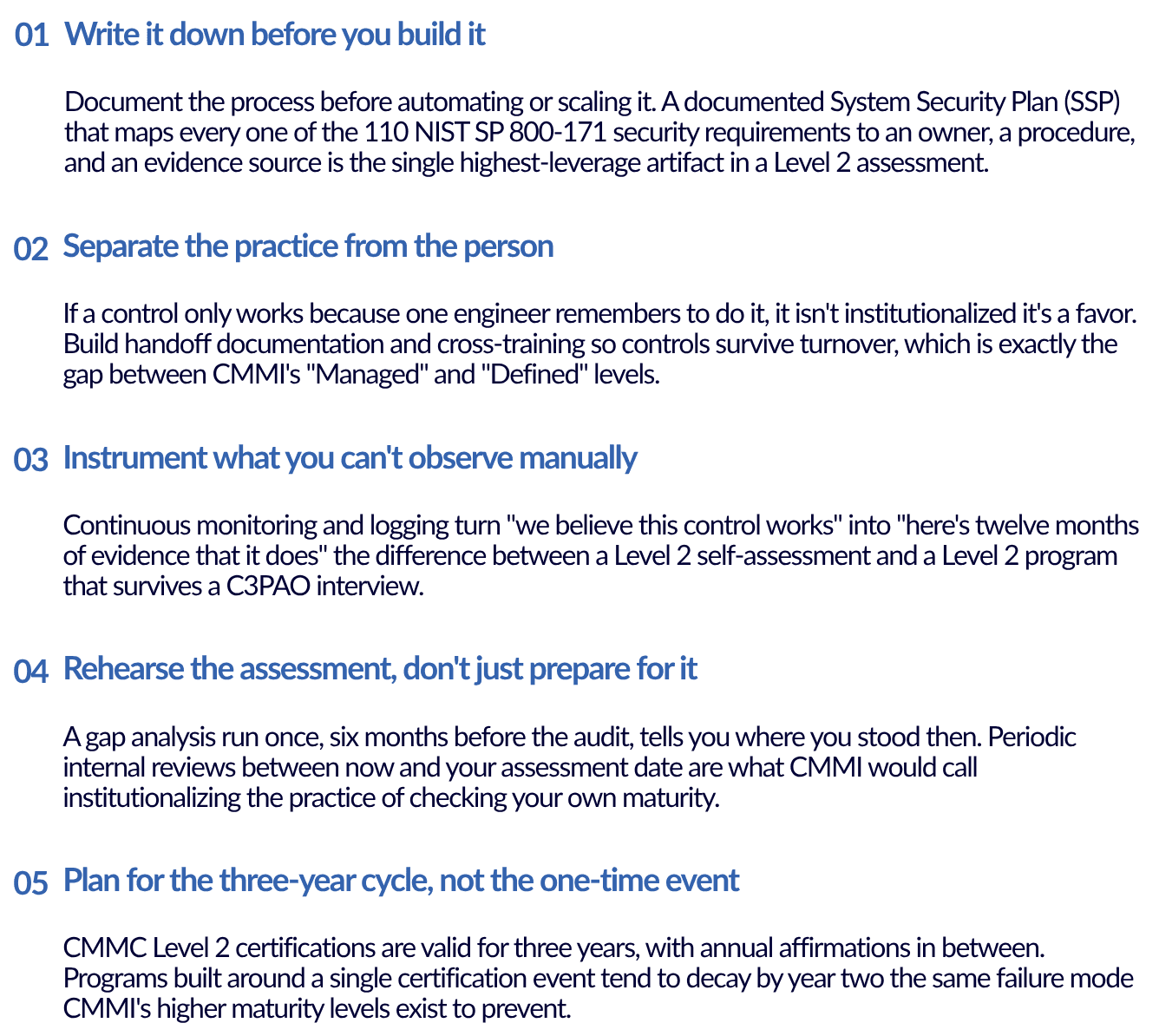
Building CMMI-style process maturity into your CMMC 2.0 program
You don't need a separate CMMI appraisal to borrow what makes it work. The practical version looks like this:
FAQ